In an era where deep learning models can generate photorealistic images and hold coherent conversations, one might wonder: do classical numerical methods still have a place? The answer is not just yes — it is that numerical methods and AI are becoming inseparable partners in scientific computing.
The Rise of Neural PDE Solvers
Over the past five years, we have witnessed an explosion of interest in using neural networks to solve partial differential equations. From Physics-Informed Neural Networks (PINNs) to Fourier Neural Operators (FNOs), the machine learning community has made remarkable strides in learning solution operators for complex PDE systems.
These methods offer tantalizing advantages:
- Mesh-free inference: Once trained, neural operators can predict solutions on arbitrary grids without retraining.
- Speed: A forward pass through a trained network is orders of magnitude faster than traditional iterative solvers.
- Data-driven discovery: They can learn hidden dynamics from observational data alone.
But Here is the Catch
Despite these advances, neural solvers face fundamental limitations that classical numerical methods handle with grace:
1. Lack of Guaranteed Convergence
Classical finite difference, finite volume, and finite element methods come with rigorous convergence proofs. We know that as the mesh is refined, the numerical solution approaches the true solution. Neural networks offer no such guarantees. A PINN might converge beautifully for one parameter set and fail catastrophically for another, with little warning.
2. Conservation Laws
Many physical systems — fluid dynamics, electromagnetics, traffic flow — are governed by conservation laws. Classical methods can be constructed to exactly conserve mass, momentum, and energy at the discrete level. Neural networks, trained on data, have no inherent reason to respect these conservation principles.
"A neural network that violates conservation of mass is not just inaccurate — it is unphysical. Classical methods give us the tools to build this physics directly into our discretizations."
3. Shock Waves and Discontinuities
Hyperbolic conservation laws admit discontinuous solutions — shock waves, contact discontinuities, rarefaction waves. Classical methods like Godunov, MUSCL, and WENO have been meticulously engineered over decades to capture these features without introducing spurious oscillations. Neural networks, smooth function approximators by design, struggle with sharp discontinuities.
The Marriage of Both Worlds
The future lies not in choosing between classical and AI-based methods, but in combining their strengths:
- Neural operators as preconditioners: Use a neural network to generate an initial guess, then refine with classical iterative methods.
- AI-enhanced mesh adaptation: Train networks to predict where refinement is needed, then apply classical solvers on the adapted mesh.
- Learned numerical viscosity: Use reinforcement learning to optimize artificial viscosity parameters, while keeping the underlying conservative finite volume framework intact.
- Hybrid solvers: Use neural networks for smooth regions and classical methods near shocks and boundaries.
My Current Work
In my research group at Amity University, we are actively exploring this hybrid approach. Our recent work on reinforcement learning-based numerical viscosity optimization demonstrates that AI can enhance classical methods without replacing them. The RL agent learns to tune viscosity coefficients in real-time, adapting to local flow features while the underlying finite volume scheme ensures conservation and stability.
Conclusion
AI is not coming for numerical analysts' jobs — it is giving us powerful new tools. The mathematicians and computational scientists who will thrive in the coming decades are those who understand both classical numerical analysis and modern machine learning. The algorithms of the future will be written in the language of both fields.
The question is no longer "numerical methods or AI?" but rather "how do we combine them best?"
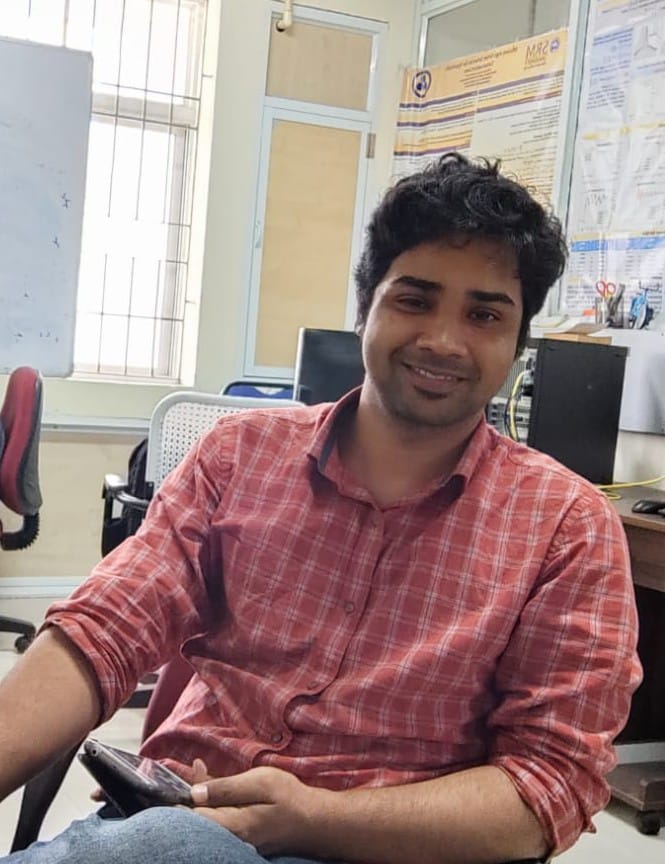
Prashant Kumar Pandey
Assistant Professor of Mathematics at Amity University, Ranchi. Researcher in numerical methods for PDEs, AI integration, and quantum-inspired computing.