ChatGPT can solve most undergraduate calculus problems in seconds. This fact has sent shockwaves through the mathematics education community. Should we ban it? Ignore it? Embrace it? After a year of experimentation, I believe the answer is clear: we must integrate it thoughtfully.
The Panic is Understandable
When ChatGPT first emerged, my immediate reaction was concern. If students can get perfect solutions from an AI, what is the point of homework? Of exams? Of even attending class?
But then I remembered: calculators did not kill mathematics education. WolframAlpha did not kill it either. Each technological advance forced us to rethink what we teach and how we assess — and ultimately made education better.
How I Use AI in My Classroom
1. AI as a Tutor, Not a Replacement
I encourage students to use ChatGPT to check their work, understand misconceptions, and explore alternative solution methods. But I require them to submit their own reasoning first. The AI becomes a personalized tutor available 24/7.
2. AI-Proof Assessments
Traditional problem sets are vulnerable to AI. Instead, I now use:
- Exploration problems: "Investigate what happens when..." rather than "Compute..."
- Code-based assessments: Students write and debug numerical code — AI can help, but cannot replace understanding.
- Oral exams: Quick 5-minute discussions where students explain their reasoning.
- Collaborative projects: Team-based open-ended problems that require creativity.
3. Teaching AI Literacy
Mathematics students need to understand what AI can and cannot do. I have added modules on:
- How neural networks approximate functions (universal approximation theorem)
- Limitations of AI in rigorous proof (AI can suggest, not verify)
- Ethical considerations in AI-generated mathematics
"The goal is not to out-calculate AI, but to out-think it. Creativity, intuition, and rigorous reasoning are human strengths that AI cannot replicate."
What I Have Learned
After a year of this approach:
- Student engagement has increased — they see relevance in AI-era skills
- Conceptual understanding is deeper — less rote calculation, more reasoning
- Academic integrity is better — clear guidelines reduce temptation to cheat
Challenges
Not everything is smooth:
- Some students over-rely on AI and skip foundational practice
- Grading takes longer with open-ended assessments
- Not all colleagues agree with this approach
Conclusion
Generative AI is not going away. As educators, our choice is simple: adapt or become irrelevant. By thoughtfully integrating AI into our teaching, we can prepare students for a world where human-AI collaboration is the norm. The mathematics classroom of 2030 will look very different from 2020 — and that is exciting.
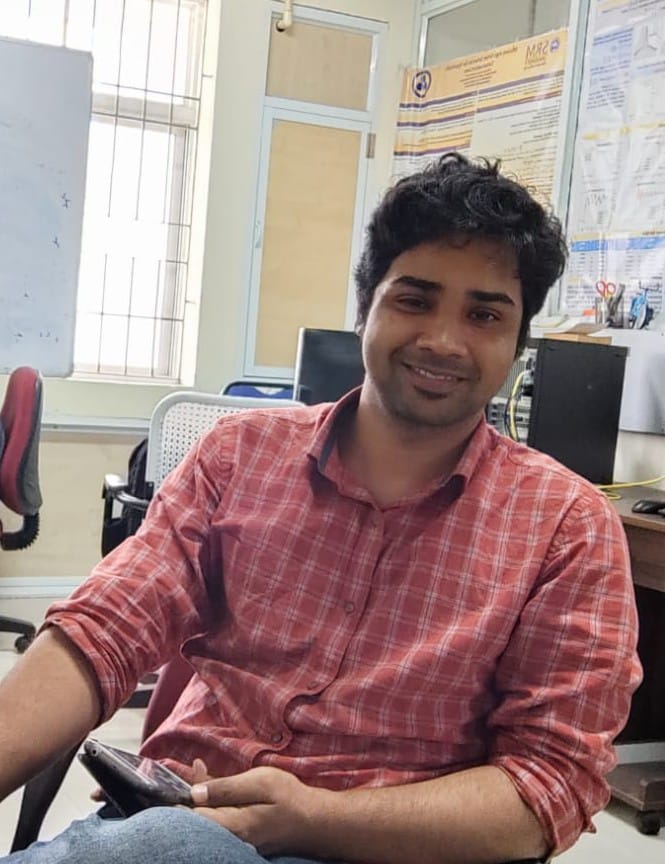
Prashant Kumar Pandey
Assistant Professor of Mathematics at Amity University, Ranchi. Researcher in numerical methods for PDEs, AI integration, and quantum-inspired computing.